Proforma Invoice – What It Is and When to Use It
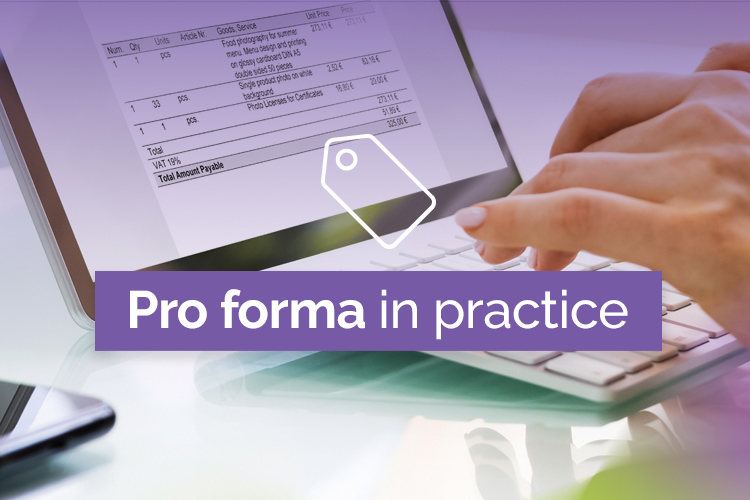
A proforma is a commercial document that looks like an invoice but serves an informational purpose. It helps organize agreements with a client and often speeds up payment, especially for deposits or larger projects.
What is a proforma?
A proforma shows the details of a planned transaction. It includes the seller and client information, a description of the service or product, the price, and VAT details. Thanks to this, the client clearly sees what they are paying for and under what financial conditions.
The most important point is that a proforma is not an invoice. It does not confirm a sale. It does not create a tax obligation and does not create a formal obligation to pay. Because of this, it is not included in accounting records or VAT settlements. Its issuance is also not required by tax law. Businesses use it voluntarily as a practical communication tool.
If a client pays based on a proforma, you issue the proper sales invoice after receiving the payment. In many situations, a commercial offer can serve a similar role. However, a proforma is often clearer for clients. It looks like a standard invoice and includes all details needed for a bank transfer.
Proforma vs. other sales documents – key differences
Proforma vs. invoice
At first glance, a proforma and an invoice may look very similar. Both documents contain the parties’ details, a transaction description, and net and VAT amounts. However, their purpose and accounting role are different.
Invoice:
- is the main accounting document
- confirms that a sale took place
- forms the basis for tax settlements
- is recorded in accounting and affects VAT reporting
Proforma:
- has an informational and commercial role
- does not confirm a sale
- does not create a tax obligation or payment obligation
- is not included in accounting
In practice, a proforma helps confirm transaction details before the sale takes place. The actual invoice is issued only when the sale happens or when payment is received.
Proforma vs. deposit invoice
These documents are often used in similar situations, but their function is different. A proforma mainly provides payment details before work starts or goods are delivered. It is not an accounting document and has no tax consequences.
A deposit invoice is a full accounting invoice. It documents the received advance payment. It must be recorded in accounting and included in VAT settlements.
In practice, many entrepreneurs use a simpler process. First they send a proforma with the deposit amount. After receiving the payment, they issue a sales invoice marked as paid. This approach reduces paperwork.
Proforma vs. offer
A proforma is sometimes confused with a commercial offer because both can show prices and cooperation terms. However, they serve different purposes and appear at different stages of the sales process.
An offer is mainly used to present a proposal and help the client make a decision. It describes services or products, the scope of work, and the proposed terms. An accepted offer may also have legal importance. It can define the agreed scope, price, and cooperation conditions.
A proforma usually appears after the offer is accepted, although it is not mandatory. In many cases, businesses move directly from the offer stage to issuing an invoice.
Using the offer and proforma functions in eFaktura.nl, you can convert these documents into a ready invoice with one click at the end of the transaction.
Do you need to send a proforma to your accountant?
Since a proforma is not an accounting document, you do not need to send it to your accountant. The accounting office only needs the final sales invoice or a deposit invoice. These documents affect tax settlements.
A proforma therefore remains a working document between you and your client.
When is a proforma especially useful?
In business practice, using a proforma often comes from the need for flexibility. It is an informational and commercial document, not an accounting one. It creates no tax consequences or formal obligations. This gives both parties more freedom to arrange payment terms.
Imagine a construction company renovating an apartment in the Netherlands. The client previously received an offer with the scope of work and a price of €10,000 and accepted it. The parties agreed that part of the amount would be paid before work starts.
At the client’s request, or according to their agreement, the contractor sends a proforma with the project value and the amount to be paid.
The document contains all the details needed for a bank transfer, but it is not an accounting document yet. This allows both sides to confirm payment details first. After receiving the money, the contractor issues the proper sales invoice and indicates the amount already paid.
The same approach is used in many industries. Examples include installation services and graphic design projects. A proforma helps organize agreements with the client before issuing the final accounting document.
Proforma in the era of e-invoicing
Digital invoicing makes document accuracy more important than ever. In systems such as Peppol or KSeF, an invoice is no longer just a PDF sent by email. It becomes part of an electronic circulation. It may go directly to accounting systems or tax authorities.
In this environment, mistakes cost more time and create extra corrections.
Read more about invoicing in the Peppol standard HERE.
This is where the proforma gains a new practical role. Because it is an informational document, it is not sent to systems like KSeF. You can treat it as a verification step before issuing the final e-invoice.
Instead of correcting mistakes later, you confirm the details earlier and without formal consequences.
A proforma is not an accounting document and does not create a tax obligation. Still, many companies find it very practical. It helps organize sales and confirm agreements with clients.
It is most often used for deposits, larger projects, or international cooperation. Thanks to this, the final invoice can be issued without errors and without the need for later corrections.