AI in a Construction Business: Where Should You Start?

AI in a construction business may bring large building projects, smart machines and complex design analysis to mind. But if you run a one-person company, you can use it for much simpler tasks: writing a message to a client, preparing a quote, translating a description of the work or organising your notes after a meeting.
This can be especially useful when you run a business abroad. In one day, you may speak Polish with a worker, Dutch with a client and English with a supplier. In the evening, there are still invoices, receipts and enquiries waiting for you.
AI will not run your business for you, but it can reduce the time you spend on administration. You just need to know how to talk to it—and when not to trust it without checking.
The construction industry sees the potential of AI, but remains cautious
A report by RICS on artificial intelligence in construction shows an interesting difference between the level of interest in AI and its actual use.
In 2025, 45% of the organisations surveyed were not using AI at all. Only 1% had introduced it more widely across their projects. At the same time, almost 70% of respondents believed that AI could help them deliver projects more effectively.
Large companies are using specialist tools to support design, cost estimation, scheduling, budget control and risk analysis. A small business does not need to start with a complex system. It is much easier to test AI on one task that regularly takes up your time or causes problems.
Large language models: where should you start?
Some of the best-known tools powered by large language models are:
- ChatGPT, developed by OpenAI
- Gemini from Google
- Claude from Anthropic
- Microsoft Copilot
You can communicate with them in everyday language. They can write and improve text, translate content, organise information, analyse uploaded materials and suggest possible solutions.
Many AI features available in other applications are powered by large language models or similar technology. You may not always see the name of the model being used. AI can be built into your email, invoicing software, text editor, graphic design app or business management system.
Large language models give you a lot of freedom, but you need to explain what you want. Apps that use AI for one specific task usually need less preparation. Invoicing software, for example, knows that the text you enter is a service description—not a message to a friend.
How can you start using AI in a construction business?
If you only write, “Prepare a construction quote”, AI will have to guess what your company does, who your clients are and how the text should sound.
Start by briefly introducing your business.
Tell AI who it is talking to
You do not need to prepare a long company presentation. Share the most important information:
- what your company does,
- which services you provide,
- which country you operate in,
- who your clients are,
- what makes you different from other contractors,
- which languages you use with your clients,
- which problems you deal with most often,
- how you want your communication to sound.
You can use a prompt like this:
I run a one-person renovation business in the Netherlands. I mainly renovate bathrooms, install tiles and complete interior finishing work. Most of my clients are private homeowners from the Netherlands. My strengths are punctuality, accurate quotes and leaving the property clean after finishing the work. I speak Polish and English, but my Dutch is limited. Writing quotes, replying to messages and describing additional work take up most of my time. Use simple and direct language. Avoid an overly promotional tone.
This information will help AI adapt its next answers to your business. You can save the description and use it at the beginning of future conversations.
Do not include your clients’ names, addresses, document numbers or other confidential information. AI does not need these details to provide a useful answer.
Start with the task that gives you the biggest headache
You do not need to find ten different uses for AI straight away. Choose one task that comes back every week.
You could ask:
I run a small construction business and preparing quotes causes me the most problems. Ask me the questions you need to understand my process. Then suggest a simple way to prepare my quotes.
Or:
I often forget some of the details agreed during a meeting with a client. Suggest a simple way to record these arrangements on my phone. The system must be convenient for one person and cannot require another paid app.
AI may suggest solutions you had not considered before. Treat them as inspiration, not professional advice. An AI assistant does not know every detail of your situation, local regulations or the specific conditions of your work.
How can AI help a construction business?
Writing messages to international clients
You can write a message in Polish or another language and ask AI to translate it and adjust the tone:
Translate this message into Dutch. Make it polite but clear. Explain that repairing the subfloor was not included in the original quote and will require one additional day of work.
AI can also explain a message received from a client, simplify difficult wording or prepare several versions of your reply.
Before sending the message, check that the translation has not changed the price, scope of work, deadline or any other important arrangements.
Preparing a quote
AI can use a short note to organise the scope of a job, divide the work into stages and identify details that still need to be confirmed.
For example:
Use the notes below to prepare a clear scope of work for a quote. Do not add any prices or tasks that I have not mentioned. List separately the questions I should ask the client before providing the final price.
The last sentence matters. Without this instruction, AI may fill in missing information with its own assumptions. They may sound reasonable but have nothing to do with the actual job.
Summarising a client visit and your arrangements
After meeting a client, you can record a quick voice note on your phone. Then ask AI to organise it into several points:
- scope of work,
- materials supplied by the contractor,
- materials purchased by the client,
- expected completion date,
- additional arrangements,
- points that still need confirmation.
It is worth sending the summary to your client. This allows both sides to check whether they understood the conversation in the same way.
Planning the work
AI can prepare a draft order of tasks, a checklist or an initial work schedule. You need to tell it what type of work is involved, how many people will work on the project, how much time is available and what the main limitations are.
Do not treat this plan as technical guidance. AI has not seen the building, does not know the conditions at the site and may overlook an important connection between different stages of the work.
Promoting your business
AI can help you write a description of a completed project, website copy or a reply to a client review. It works best when you provide specific information instead of simply asking for “an attractive social media post”.
“We renovated this bathroom in five days, keeping the original floor and matching the new tiles to it” says more than another general claim about professionalism and the highest quality.
You can also ask AI to turn one description into a short Instagram post, a longer Facebook post and a Dutch version for local clients.
The most convenient AI may already be inside your everyday tools
Large language models offer many possibilities, but you need to explain the context each time. For tasks you repeat regularly, it can be easier to use AI features built into the software you already use to run your business.
AI on your phone can summarise a note. An email assistant can help prepare a reply. A design app can suggest a layout for an advert. AI inside invoicing software can translate a service description while you are creating the invoice.
This is also how AI works in eFaktura.nl. It is available during specific tasks inside the application, so you do not need to write separate prompts or copy text between different tools.
Where does AI help you in eFaktura.nl?
Clearer invoices and quotes
The AI assistant in eFaktura.nl mainly helps when you create invoices and quotes. You can enter the name of a product or service in your own language and describe the completed work in detail. AI then translates the full description into the language of the document.
For example, instead of using a general phrase such as “renovation work”, you can list the actual tasks: preparing the surface, repairing the walls, applying two coats of paint and installing skirting boards. As a result, your client receives a clearer document, while you avoid searching for specialist terms in another language.
You can also save the translated item in your product and service database. The next time you complete similar work, simply select it from the list.
Messages and records in your language
In addition, AI can translate:
- text entered in the “Notes” field on an invoice or quote,
- descriptions of completed work in a timesheet,
- notes added to journeys in your mileage log,
- email messages sent to clients.
When sending an invoice, quote or timesheet from eFaktura.nl, you can write the accompanying message in your own language. The AI assistant translates it into the recipient’s language, so you do not need to use a separate translation tool.
Automatic translation in BUKKI
BUKKI automatically translates advertisements published by other entrepreneurs. You can read each advertisement in your own language while still seeing which language was used in the original version.
Less typing when adding expenses
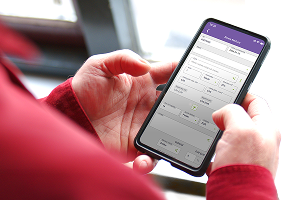
AI also helps you manage business expenses. After you upload a photo of a receipt or supplier invoice, it reads the key information and prepares it for verification. In addition, it can improve the quality of the image and remove unnecessary background.
However, you remain in control. You check the extracted information before approving the document. Only confirmed data is saved and included in your statistics.
See what has changed in the EXPENSES feature.
What should you remember when using AI?
Artificial intelligence can sound very confident even when its answer is wrong. It may translate a specialist term incorrectly, leave out important information or suggest something that does not follow local rules.
Always check:
- prices, rates and calculations,
- the scope of work and exclusions in a quote,
- deadlines and payment terms,
- translations of important arrangements,
- information extracted from documents,
- tax and legal information.
AI should not make decisions for you about a building’s structure, site safety, technical installations or compliance with construction regulations. These areas require a qualified professional who understands the project and local requirements.
You should also avoid uploading full contracts, clients’ personal data, identity documents or photographs showing people to public AI tools before checking how the chosen service processes and stores information.
Start with one conversation
The easiest way to start using AI is to introduce your business, describe the task that takes up most of your time and ask for several possible solutions. You do not need to use any of them immediately.
Check which suggestions fit the way you work. Ask follow-up questions, correct inaccurate answers and reject ideas that do not suit your business. AI should help you think and save time—not make decisions for you.
For regular tasks, check whether AI is already available in the tools you use. Sometimes the most useful form of AI does not produce a complicated analysis. It simply translates a message to your client or saves you from typing out a receipt after a long day at work.
Source: RICS – Artificial Intelligence in Construction Report 2025